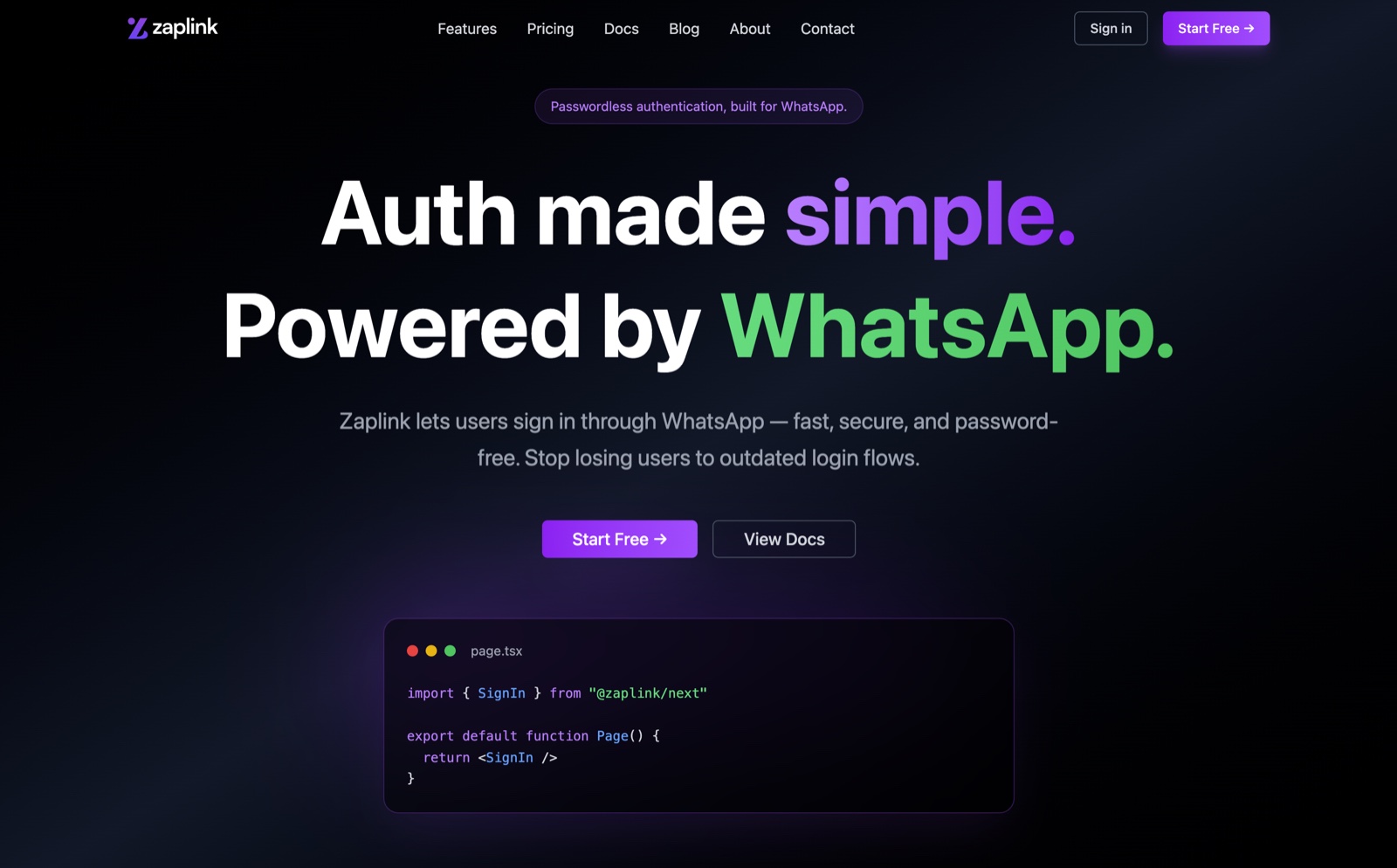
Zaplink lets a product authenticate people over WhatsApp instead of email. The user gets a one-time code or a link in the app they already have open, and signs in from there.
In much of Latin America that is the difference between a login that works and one that quietly fails: the inbox is an afterthought, but WhatsApp is where people actually are.
The platform issues one-time codes and magic links, verifies them, and can act as a second factor for products that already have a password. Rate limiting and abuse protection are part of the service rather than something each integrator has to remember.
Provider callbacks arrive on their own endpoint and the slow work — delivery, retries — runs on a queue, so an authentication request does not wait on a messaging provider to answer.
Packages for the framework you already use
The point of Zaplink is that adding it should be small. There are packages for Node and the browser, a React client, a React Native client, and a Next.js integration, all built on a shared core, plus example applications that show each one wired up end to end.
The console
Behind the API there is a console for the people running it: applications and their credentials, the users who have signed in, and an audit trail of what happened.